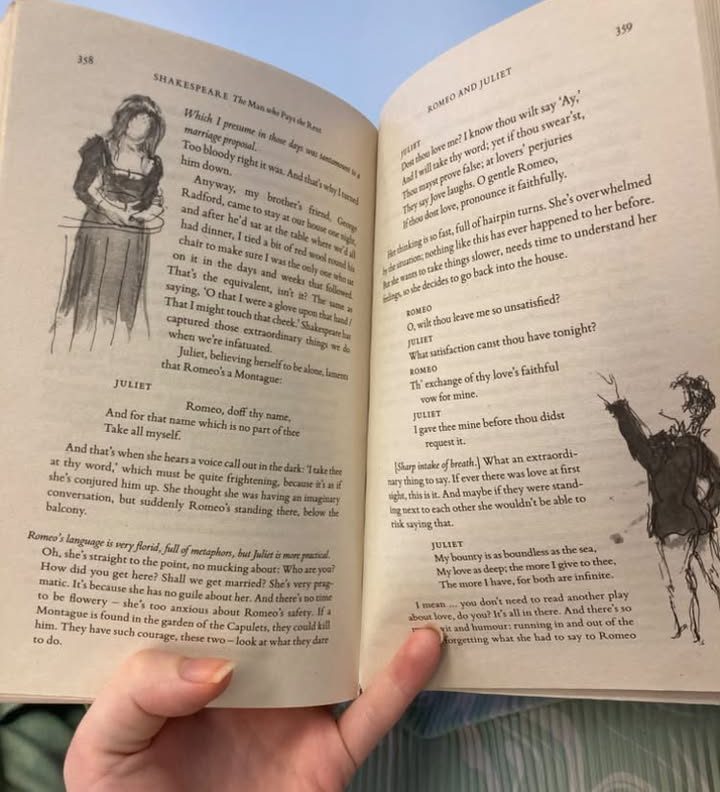
Roughly a year ago, I was about half way through reading all about Dame Judi Dench’s deep history with the world of Shakespeare. After finally picking it back up last week, and having now finished it, I have no idea why I ever stopped. Immediately after putting it down, I was longing to go back to the beginning to re-immerse myself into this book’s charm.
Shakespeare: the man who pays the rent documents a series of intimate interviews between Dench and actor/director Brendan O’Hea. O’Hea has no easy task of walking through Shakespeare’s catalogue as he discusses with Dench every Shakespearean role she has ever played throughout her seven-decade long acting career. Dench has a sharp memory, reflecting rather fondly and in much depth over nearly every role, but was not immune here to forgetting minor details or butting heads with her friend over their interpretations of events and of characters. The palpable adoration for the bard would make for a compelling read even for those who may be unfamiliar with his work or who are simply not fans.
The format is simple but consistent. O’Hea works his way through the events of each play from the perspective of each character. If Dench had played multiple different characters of one play via different productions, they would discuss everything from one character’s perspective first, and then another character’s in the next section. Through the interviews, the duo provide so much insight not just into Dench’s interpretations and approaches to each character, but to each production and play. There is much warmth in how Dench speaks about each director and the actors she has worked with, as well as how she discusses her love and appreciation for Shakespeare’s use of language. The structure of the book also acts as valuable insight into the story and language of each play; as someone who loves the few plays that I know, but has rarely performed or seen Shakespeare, I appreciated the depth they went into here.
My favourite character analysis ended up being from a play I barely knew at all, beyond a brief mention of a production in a Theatre Studies seminar five years ago. Cymbeline‘s Imogen was a character I still barely knew, and while I still cannot recall much about the play, Dench’s breakdown of the character stuck with me. I was fascinated by her insisting on it having been a difficult part to play, and was gripped by a particular breakdown of a monologue of hers.
Reading their many discussions helped to expand my understand of approaching not just Shakespeare, but acting in general. Having spent more than two years away from it, there are many times where the ache of missing it is palpable, and reading Shakespeare was certainly one of them. However, this time around there was less aching; instead, I felt motivated, and hopeful that I will gradually become less scared of pursuing theatre again.
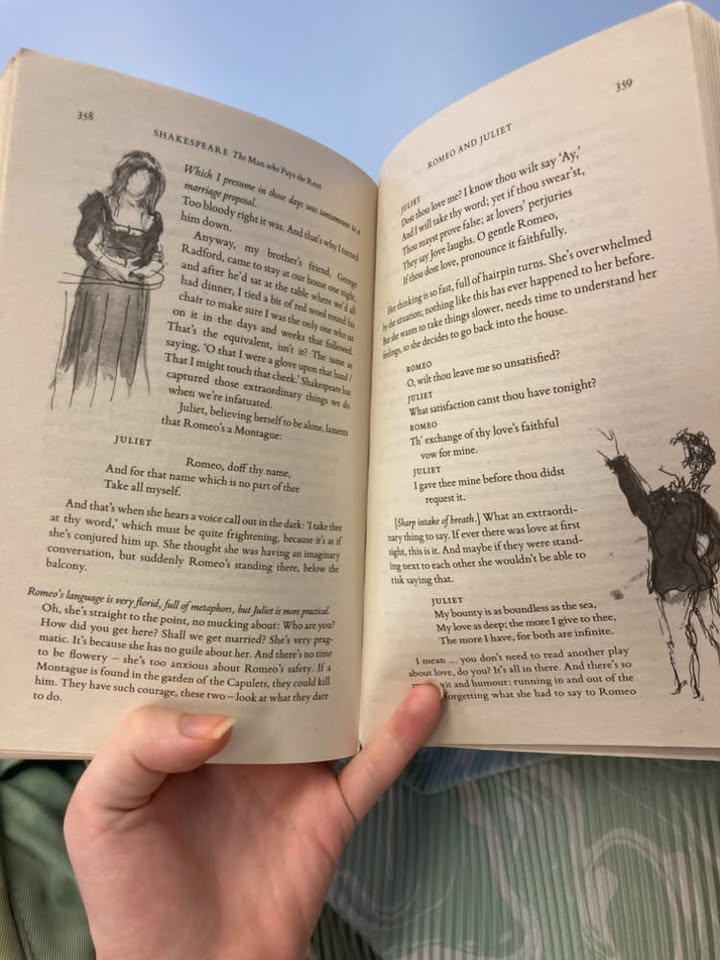
A beautiful touch to this book was the inclusions of some of Dench’s drawings, indicative of her brilliant, photographic memory. Sketches are dotted throughout the book: some of props, many of costumes. They line the inside of the front and back of the book in colour. The details are gorgeous, full of personality, and made bittersweet by factoring in Dench’s deterioration of her eyesight in recent years.
 gemma short writings
Leave a comment